by Carsten Dürer, translated from German
Piano News Magazine (September 2025)
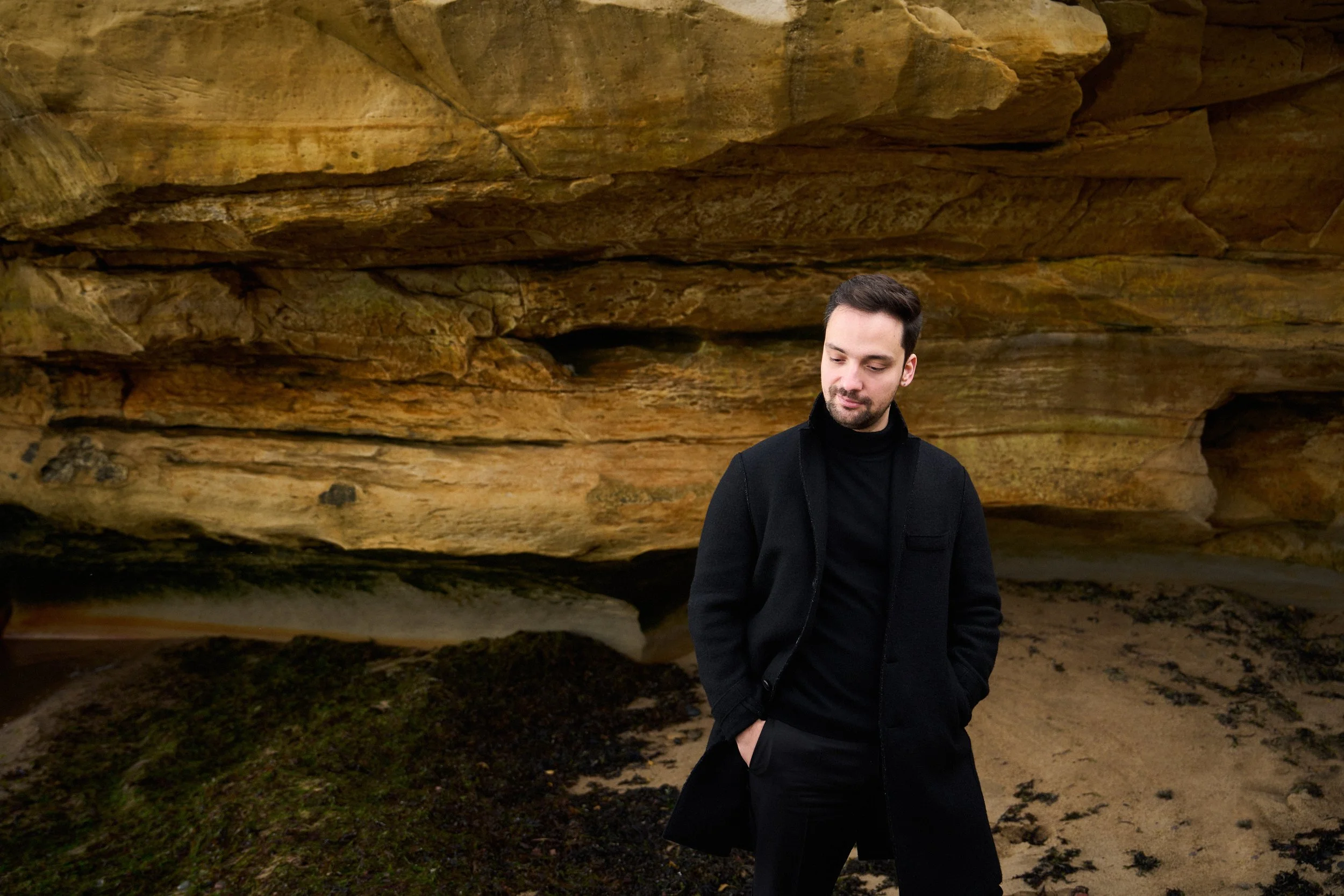
Cristian Sandrin was born in 1993 in the Romanian capital Bucharest. That is also where he learned to play the piano. However, after completing his first degree, he was drawn to the Royal Academy of Music in London, where he has lived ever since. That is also where he is mainly active. In July of this year, however, he played a piano recital with works by Beethoven and Mozart at the Beethoven House in Bonn during the Piano Summer festival. He has also released two new CDs in quick succession, featuring Beethoven's last three sonatas and all of Henry Purcell's suites. We wanted to find out more about Sandrin and travelled to Bonn to talk to him.
Sandrin arrived from England the day before and spent the morning trying out the still relatively new Steinway D grand piano in the chamber music hall of the Beethoven House in Bonn. He is thrilled. Now we are sitting opposite the 32-year-old in the upper sofa corner of the chamber music hall.
His Formation
When his biography states that he comes from a musical family, does that mean that his father was also a pianist? "My father was a pianist and professor of piano. My mother is not a musician, but she loves music and created an environment conducive to music-making. Everything in our home revolved around music. For me, it was nothing unusual: my father practised on the piano and I heard everything” He laughs at this story. ‘We went to concerts together, musicians from the concerts came to our house. I literally lived in music when I was a child.’ Was there ever any question as to whether Sandrin himself wanted to learn to play the piano? "No, it was too natural. I thought everyone would play the piano. And when I started school, no one else played the piano except me.‘
At the age of seven, he went to a general education school, then to grammar school. ’My parents wanted me to get a good general education and not go to a specialised school. They wanted me to have a choice about what I wanted to do later in life and didn't want to pressure me into becoming a musician." During those years, he had piano lessons, and his parents said that he could perhaps play the piano until he went to high school (14 years old), and then he could still decide whether he wanted to go to a school with a different specialisation. "However, I began to love playing the piano when I was about 13 years old. But I also liked mathematics. So at that age, I asked myself what I should do. Then I played in a piano competition and won first prize. I really enjoyed playing on stage, it was very fulfilling. And then you want more of it."
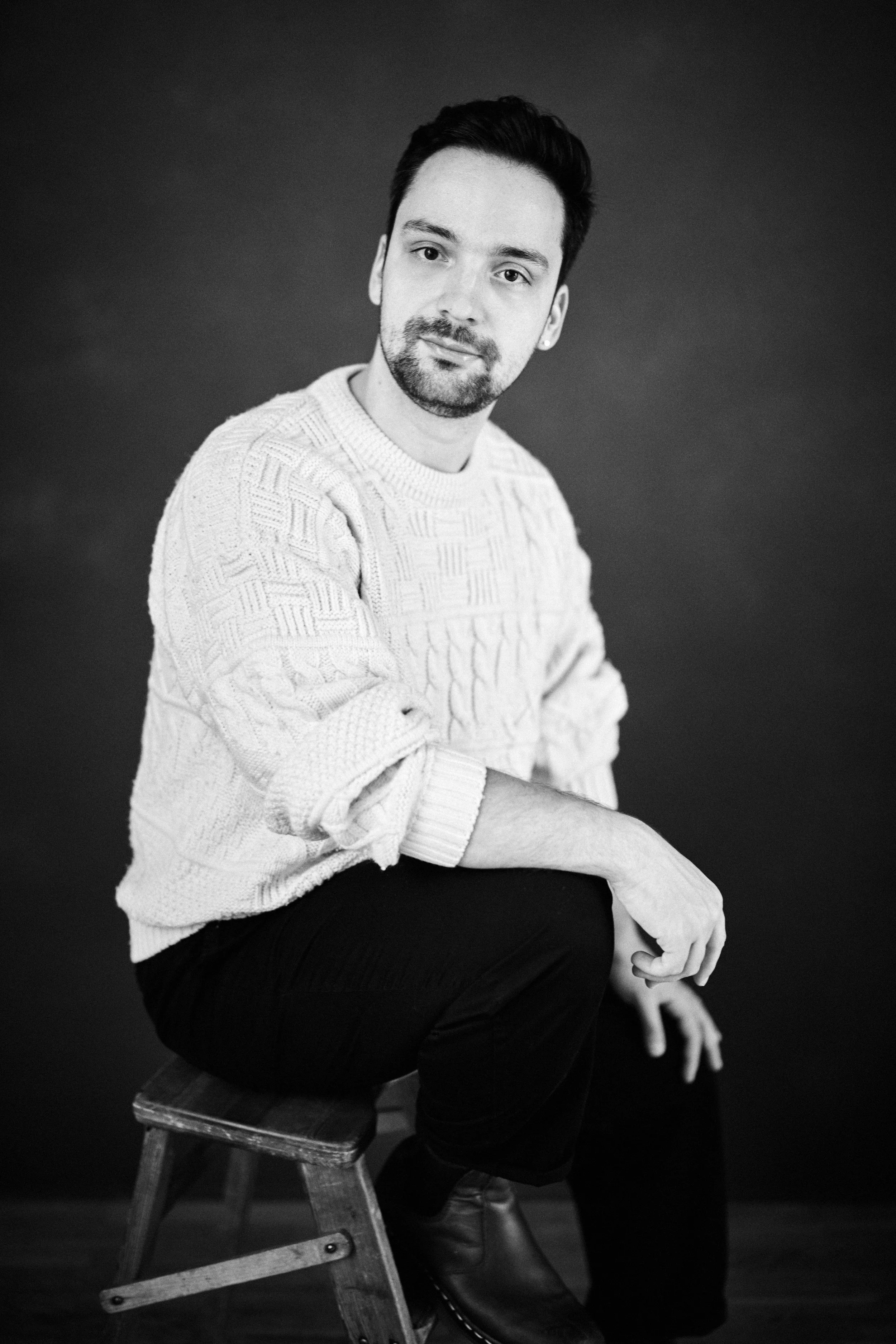
When he was 16 years old, he went to the Dinu Lipatti Special School. ‘My teacher, [Marina Dragomirescu], with whom I had worked the entire time before, was also a teacher at the Dinu Lipatti Special School, so I went to her class.’ His father never gave him lessons, but listened to Cristian practising and then called out comments from the other room. Until Cristian was about 10 or 11 years old, father and son practised on the same instrument. ‘After that, we had two instruments set up so far apart in our flat that we could practise at the same time. Although I now live in London and my father passed away two years ago, my mother tells me that she can still hear the sound of the piano in the house.’
London
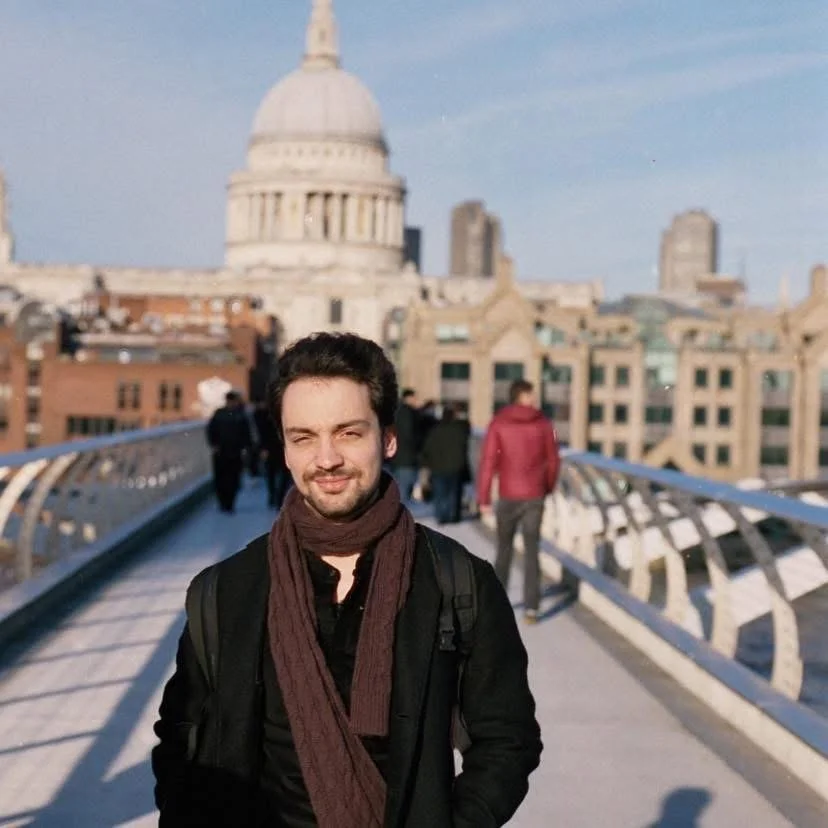
After Sandrin graduated from the “Dinu Lipatti” Art College specialised school, he left his native Romania and headed for London. Why? "At the SoNoRo Festival, a wonderful chamber music festival in Bucharest, I met pianist Diana Ketler from Latvia. I had a few lessons with her and thought that she was the teacher I wanted to work with.‘ So he went to London, where Diana Ketler taught at the Royal Academy of Music. He was immediately awarded a full scholarship after applying. ’It was a good decision to go there and study with Diana Ketler," he sums up. Although he completed his studies long ago, he has also taken lessons with Christopher Elton in the final year. In addition, he has been influenced by many masterclasses, among which the Wilhelm Kempff masterclasses in Positano with Louis Lortie stand out in particular,
he says.
Concert organisation
Naturally, Cristian Sandrin currently performs mainly in his adopted home of England. He is also the artistic director of Kettner Concerts, which mostly take place at the National Liberal Club. He also plays there himself. "This is one of the best-known and most long-established gentlemen's clubs in London. It is an imposing building directly opposite the Southbank Centre located on the Thames. There is also a bit of classical music history there. When Rachmaninoff was on his last concert tour in Europe before going to America, he played a recital there. It was actually his last concert before going to America.” But how did that come about? "We organise concerts in this location once a month. But we also organise concerts in Richmond, Manchester and Oxford. There are only three of us who work for the Kettner Society organising all these concerts at the moment. A friend of mine had the idea of organising a fundraiser towards a grand piano to kick start a concert series there. The fundraiser was succesful Now we're expanding this series after the acquisition of the piano. But we're really largely dependent on ticket sales, otherwise we have to organise other concerts to raise money. For me, it's a wonderful opportunity to connect directly with the audience."
Sandrin admits that organising concerts made him start to really think about whether certain programmes are attractive to audiences or whether they work at all. ‘Now I have to think about whether a particular artist attracts enough of an audience. All these questions that you don't think about as a pianist who practises and spends most of their time confined to the practice room.’ He laughs.
In addition to his regular teachers and participating in masterclasses, Cristian Sandrin also took part in competitions. However, none of the really famous ones appear on the list of competitions he completed. Was that a conscious, deliberate choice? "I went to many competitions but in retrospective I realise hadn’t known how to prepare for them. Then, when I was about 25, I got to a stage where I knew how to prepare for a competition, by participating in various competitions playing the same repertoire. And in 2020, I was accepted into three important competitions: Montréal, the Queen Elisabeth Competition and the Chopin Competition in Warsaw. And then the coronavirus pandemic hit... And during the pandemic, I wanted to focus on a completely different kind of repertoire. I learned the Goldberg Variations, Beethoven's last three sonatas, and so on. After that, my competition repertoire was no longer in shape, so to speak. That's why I didn't go to all of these competitions when they were rescheduled." Does he still regret not participating today? ‘Perhaps not,’ he says thoughtfully. ‘I have concerts, I organise concerts, so I'm also getting to know that side of the business. I'm very positive about the future.’
Repertoire and projects
Does he now build his repertoire according to these criteria? ‘Yes, absolutely.’ Sandrin is particularly fascinated by the repertoire of the Viennese Classical period. In Bonn, for example, he plays Beethoven's three sonatas Op. 2 and combines them with the two early sonatas in C major, K. 279, and F major, K. 280, by Wolfgang Amadeus Mozart. Sometimes he also combines parts of this programme with Haydn sonatas. In addition, he has already played Beethoven's last three sonatas, Op. 109 to 111, several times. ‘That's my favourite repertoire,’ he says candidly. But he is also working on other projects. ‘I'm currently working on a special project based on Bach's Goldberg Variations,’ he begins to explain. ‘Our organisation, the Kettner Society, commissions contemporary composers to write new variations on the theme of the Goldberg Variations. We then call these the “New Goldberg Variations”.’ Will there be 33 variations? Sandrin smiles: "We'll have to see how many there will be. So far, there are three new variations. I have inserted these at specific points in the Goldberg Variations in the concert, depending on the approach chosen by the respective composer, i.e. a canon, a virtuoso variation or a dance form, as we find them in the original variations."

But he also admits that it is not easy to raise the money for the commissioned works. ‘Perhaps there will be 30 variations, but it's not easy to raise the money for it,’ he explains. For him, it's a wonderful way to combine a famous work with contemporary music, and he hopes that the audience will then become more attentive to the other works by the respective contemporary composers. The more variations are rewritten, the fewer repetitions of the original Bach composition he plays, so as not to let the length get out of hand. Last year, he also played a programme based on the poet and composer E. T. A. Hoffmann, he explains: "Most people don't know that E. T. A. Hoffmann also composed. So I played one of his piano sonatas and works inspired by him: Schumann's “Kreisleriana”, works by Brahms and Tchaikovsky's “Nutcracker” suite.‘ He admits that Hoffmann's sonata seems like an ’idiosyncratic genetic mutation," as he puts it.
Another project involves the four-handed version of Dmitri Shostakovich's Seventh Symphony, known as the ‘Leningrad Symphony’. And that's with Jed Distler, who is far better known in this country as a journalist and radio presenter. How did that come about? "He wanted to play a concert at the Liberal Club with his friend, who cancelled. So I stepped in. We looked at the possible dates together. Of course, we have the Shostakovich Year 2025. I was told of this four-hands version of Shostakovich’s symphony that is almost never performed in concerts. So we scheduled it in
our series."
Recordings
Cristian Sandrin's first recording has already attracted attention, primarily due to its repertoire and the quality of his playing. In 2023, he combined Maurice Ravel's ‘Miroirs’ with George Enescu's Piano Sonata No. 1 and Cyril Scott's ‘Paradise Birds’. Then, in March of this year, the recording of Beethoven's last three piano sonatas was released – and just three months later, the complete recording of all of Henry Purcell's suites. A very tight recording schedule, wouldn't you say?
"I really wanted to record an album of early music that is rarely played. So I looked at Couperin and other composers. One of my teachers at the Royal Academy of Music, Daniel Ben-Pienaar, released a wonderful recording some time ago with works by the two English composers William Byrd and Orlando Gibbons. This is, of course, much earlier repertoire than Henry Purcell. By chance, I heard a recording with Myra Hess playing a few disparate movements from a suite by Purcell. And it was so charming that I looked at this music and started playing it." He believes that these works sound wonderful on the piano – and proves it in his recording. But how can they be integrated into a concert programme? “It can only work with a select few of these suites, because otherwise the they would all feel too alike, as there is always a very similar musical language between the movements of the suites.”
He therefore came up with something special for the recording: ‘I recorded all the allemandes, all the sarabandes and all corresponding movements one after the other so that I could make them sound less alike, find a different character for each allemande, or sarabande. Otherwise, when you record them in the order of the suite, they may all end up sounding too similar in character,’ This trick makes the pieces from the suites sound extremely individual on the recording.
But why were the recordings released so quickly after one another? "The Purcell recording dates from April 2024, and five months later, in August 2024, I recorded the Beethoven sonatas. However, the Beethoven recording was released sooner and the Purcell recording a little later, so it seems that both recordings came out with only a three-month delay." Cristian Sandrin believes in physical CDs and does not want to release only digital recordings.
At 32 years of age, Cristian Sandrin is an extremely open-minded and highly acclaimed pianist. He has attracted attention with his recordings, above all due to the quality of his playing. This confirms that you don't have to win a major competition to attract attention. Above all, you have to believe in yourself and your strengths and follow your repertoire inspiration in order to be more than just one of many in today's music world. Cristian Sandrin certainly stands out from the crowd.